
IT consultant, technology user, tinkerer and sometimes Klingon ; tips [email protected]
online
Joined July 2008
- Tweets50.3K
- Following2.7K
- Followers65.2K
- Likes129K


Pinned Tweet
Sean Michael Kerner's Spring 2023 Human Writer certificate authory.com/SeanMichaelKerne…
That's write I'm human. I write about #AI. Skynet hasn't won (yet).

Sean Kerner retweeted

As one of the original co-authors of PHP, I’m used to seeing PHP take its share of heat whenever a high-profile vulnerability makes headlines—most recently with PHP2Shell (CVE-2026-109618 / CVE-2026-109619).
Critique is healthy, and runtime security always needs to improve. However, treating this as a "PHP problem" misses a much bigger shift happening across the entire software industry right now.
We are entering an era where autonomous AI agents are fundamentally changing vulnerability discovery and exploitation. Researchers and adversaries alike are using agents to audit millions of lines of complex, low-level C, C++, and JIT runtime code—uncovering deep-seated memory corruption bugs that sat hidden for years, and compressing the time from discovery to working RCE exploit from weeks to hours.
Look at just the past few weeks across other major ecosystems:
- Node.js & .NET (Node2Shell / CVE-2026-111497): A critical out-of-bounds write in the native Brotli compression decoder bundled in Node.js (and also requiring out-of-band patches in .NET 8, 9, and 10), enabling unauthenticated RCE simply by sending a malformed compressed HTTP payload.
- Java (Java2Shell / Java4Shell / CVE-2026-114938): A critical heap buffer overflow in OpenJDK’s HotSpot JVM hardware-accelerated Base64 decoder (java.util.Base64), exposing default enterprise Java stacks to unauthenticated RCE via crafted Base64 strings.
- Python (CVE-2026-112900): A critical 9.2 CVSS unauthenticated RCE in the ubiquitous Pillow library triggered by crafted image uploads.
None of these are flaws in developer application code—they live deep in the foundational runtimes, standard libraries, and native dependencies that every modern stack relies on.
The takeaway: every mature runtime carries legacy C/C++ or JIT attack surface that AI agents can now probe at unprecedented scale. The real lesson for all of us—regardless of stack—is that we have to use these same agentic capabilities defensively: to audit core runtimes continuously, harden memory-unsafe boundaries, and shrink patch-deployment windows to match machine-speed exploitation.
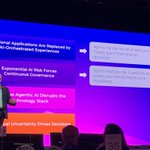
guess what @microsoft isn't even hiding that it's Skynet now - in an Ignite session now - an exec is detailing the Myles Dysan agent (yeah I 've seen that movie and I know how this ends

1
246


Sean Kerner retweeted

6.2 Astra is here. I’ve been testing it for awhile.
I think this is the worst model OpenAI has ever released.
I’ll share more soon.
Sean Kerner retweeted

The whole Internet is likely to crash this Thursday.
How do I know?
GTA VI gets released.
oh and just in case anyone is keeping score.. @Oracle had an AI/ data event in Toronto too (sorry no pics..busy day and sucky connectivity for me..)
oracle.com/artificial-intell…

1
180
Sean Kerner retweeted

IKEA got hacked. The hackers were inside for six hours and still couldn't find the exit.

Some of the world's most visited websites, including those belonging to Zoom, HSBC, Equifax, CNN, Salesforce and IKEA, were subverted in an effort to steal cryptocurrency and infect iPhones, a security researcher said reut.rs/4ztZvC2

"Within @databricks , 92% of prompts were going to too large of a model. That translates into millions of dollars a year wasted on what could have gone to a more right size model for the problem."
yeah model routing is a real need. #DAAIWTT

"Every payment, every loan, every trade is a decision that we make on the information that we have, and trust is what we have earned by getting all of these decisions right for the last nearly 200 years. So what's changed is in the data, and obviously we have new capabilities. But what's changed is in the data. It's what now intelligence can do with all of this, with AI and increasingly with agentic AI."
@scotiabank CIO Valli Musti
speaking at Databricks #DAAIWT @databricks

98


Sean Kerner retweeted

Finding Linux bugs is easy now – fixing them is another story zdnet.com/innovation/ai-bug-… via @ZDNET & @sjvn
Some #Linux maintainers are quitting under the crushing strain of AI bug reports, but there are signs of hope.

Sean Kerner retweeted

We are tracking a breach of a 3rd-party JS host impacting hundreds of high value websites.
This is staggering.
Sean Kerner retweeted

AWS is scared of @Cloudflare so they kicked us out of Re:Invent. No problem, we’ll just throw a more fun side event in Vegas. Register now: cloudflare.com/events/vegas/

Sean Kerner retweeted

FFMPEG had one of the most valid crash outs in infosec history IMO. There's a huge elephant in the room when it comes to the fact that cybersecurity is extremely unbalanced. You have like 1,000 people pointing at problems for every 1 person fixing them.
Vulnerability research is extremely important, but it's become somewhat of a marketing stunt. First with fuzzers, and now with LLMs. It's a lot of "look what my new toy can do" rather than earnest attempts at actually fixing security problem.
What Google did to open source developers was especially egregious. They're a $3.6 trillion dollar company, who spent billions upon billions of dollars building a bot that points at problems really really fast, then they just dumped them all on a bunch of unpaid open source project maintainers to fix.
Then because of Google's 90 day disclosure policy, the maintainers have 90 days to fix the issues. After 90 days, Google goes public with the issues, making their project look bad if the vulnerability is yet to be fixed, and also potentially harming users if it gets exploited.
The 90 day policy was intended to give developers a reasonable amount of time to fix issues, while also applying some pressure with the threat of disclosure. Otherwise, you do get a bunch of goober ass vendors that will just ignore all security issues reported to them, then act completely surprised when their software gets hacked.
But when you're a small team, non-profit, or a solo developer, and you have a trillion dollar company's AI just blasting you with infinite problems to fix (each coming with a 90 countdown & a threat), that becomes extremely untenable. They're essentially inadvertently blackmailing developers into becoming unpaid interns.
Then on top of that, Google profits unimaginable amounts of money from the use of open source code. They use FFMPEG's code extensively across several highly-profitable products, meanwhile FFMPEG's developers work for free. There's no reason Google couldn't have donated money, engineers, AI tokens, or something towards fixing the problems. They can more than afford it.
I don't think Google has any malicious intent at all, it's just that the whole incentive structure behind vulnerability research is completely whack. All the glory goes to people who find issues, not those who fix them, so there's not a whole lot of interest in helping with fixes. Some vulnerability researchers will submit fixes with their reports, but most don't.
Honestly, in 2026 cybersecurity basically just feels like the equivalent of 50,000 people following the housecleaner around yelling "you missed a spot". Abysmally little effort has gone into anything outside of pointing out vulnerabilities.

Sean Kerner retweeted
My bet is on liar.

Stupid or liar?
Microsoft’s public explanation for the Microsoft 365 outage is that “the incident was introduced by an issue during an earlier network capacity upgrade that surfaced following a recent network change.” In other words, a latent network-capacity problem was exposed by a later change, causing capacity loss across Microsoft 365 services.
betanews.com/article/microso…
That explanation leaves us with two uncomfortable possibilities.
Either Microsoft is not telling us the real root cause, or Microsoft built and operated an architecture with a single point of failure that should never have existed in the first place.
Resilience is about distribution. Not just spreading workloads across regions and data centers, but coordinating that distribution through mechanisms that preserve optionality when things go wrong. Bad updates happen. Bad configuration changes happen. Cyberattacks happen. Human error happens. Hardware fails. Networks partition. The whole point of resilient architecture is that none of those events should be able to take down a global productivity platform in one broad motion.
If a network capacity upgrade can sit latent in the environment and then be triggered by a later change in a way that impacts users internationally, that is not just an “oops.” That is an architectural failure. It suggests too much shared control, too much coupling, too little blast-radius containment, or insufficient rollback isolation. Pick your poison.
The cloud does not forgive architectural fantasy. You do not get resilience because you have many regions on a diagram. You get resilience because failures are contained, coordination layers are redundant, control planes degrade safely, and recovery paths remain available when the primary automation gets confused.
Microsoft is effectively saying the architecture they leveraged allowed a broad single point of failure. That should not be acceptable at this scale.
So I come back to the same place: either the root-cause explanation is incomplete, or the architecture is sillier than anyone running global-scale infrastructure should be comfortable admitting.

Sean Kerner retweeted

Stupid or liar?
Microsoft’s public explanation for the Microsoft 365 outage is that “the incident was introduced by an issue during an earlier network capacity upgrade that surfaced following a recent network change.” In other words, a latent network-capacity problem was exposed by a later change, causing capacity loss across Microsoft 365 services.
betanews.com/article/microso…
That explanation leaves us with two uncomfortable possibilities.
Either Microsoft is not telling us the real root cause, or Microsoft built and operated an architecture with a single point of failure that should never have existed in the first place.
Resilience is about distribution. Not just spreading workloads across regions and data centers, but coordinating that distribution through mechanisms that preserve optionality when things go wrong. Bad updates happen. Bad configuration changes happen. Cyberattacks happen. Human error happens. Hardware fails. Networks partition. The whole point of resilient architecture is that none of those events should be able to take down a global productivity platform in one broad motion.
If a network capacity upgrade can sit latent in the environment and then be triggered by a later change in a way that impacts users internationally, that is not just an “oops.” That is an architectural failure. It suggests too much shared control, too much coupling, too little blast-radius containment, or insufficient rollback isolation. Pick your poison.
The cloud does not forgive architectural fantasy. You do not get resilience because you have many regions on a diagram. You get resilience because failures are contained, coordination layers are redundant, control planes degrade safely, and recovery paths remain available when the primary automation gets confused.
Microsoft is effectively saying the architecture they leveraged allowed a broad single point of failure. That should not be acceptable at this scale.
So I come back to the same place: either the root-cause explanation is incomplete, or the architecture is sillier than anyone running global-scale infrastructure should be comfortable admitting.
Sean Kerner retweeted

Sorry for the long-ass post, I did some OSINT shit.
I pulled live public flight feeds, weather radar status, and space weather data to see what's actually going on during today's nationwide FAA grounding.
TL;DR: radar, GPS, and weather sensors are all working fine. What broke is the long-distance communications network that lets the FAA's 22 regional air traffic control centers talk to high-altitude planes and hand them off to each other.
When people think of air traffic control, they picture the glass tower at an airport. Those towers only handle takeoffs, landings, and nearby airspace. Once a plane climbs out, it's handed off to one of 22 regional Air Route Traffic Control Centers (ARTCCs) — giant facilities that manage high-altitude cruising traffic across whole regions of the country.
Normally, those 22 centers are regionally isolated: if one loses power or a local fiber line, neighboring centers absorb or route traffic around it. Having all 22 degrade at once is virtually unheard of because it means a shared national backbone failed, leaving no healthy neighbor to take over.
That's why the FAA's Command Center used such stark, blanket wording ("Due to extraordinary circumstances and for reasons of safety... all airports are ground stopped until further notice"*) — it's standard protocol when a national-level freeze has to happen immediately before engineers even know how long repairs will take ("safety issue" means "oh shit, stop" in aviation circles, unlike with AI companies).
All 22 centers losing comms at once is, indeed, "extraordinary circumstances".
Here's what the live data shows:
1. US airspace is emptying out fast.
Normally on a Friday evening, thousands of planes are in the air over the US. In live tracking data from OpenSky Network, the number of airborne planes over the lower 48 is steadily draining as flights land and no new commercial departures take off:
• 6:36 PM EST: 1,083 airborne
• 6:42 PM EST: 1,035 airborne
• 6:49 PM EST: 990 airborne
There are zero emergency distress codes broadcasting.
2. Major airports are, predictably, stacked.
Looking within 30 miles of major hubs around 6:37 PM EST (`adsb.lol`), almost nothing is moving:
• NYC/JFK area: 8 in the air vs. 67 on the ground
• LAX: 14 in the air vs. 40 on the ground
• Dallas (DFW): 7 vs. 36
• Denver (DEN): 13 vs. 29
• Atlanta (ATL): 5 vs. 25
• Chicago (ORD): 9 vs. 24
• DC (DCA): 8 vs. 22
A lot of the coastal airports had to stop accepting diverts.
3. The few planes still taking off are enlightening.
Across the entire US at 6:36 PM, only aircraft were taking off (that is: below 10,000 feet and climbing). They fell into two clear buckets:
• 3 international widebody jets (`DAL281` out of Seattle, `DAL156` out of NYC, and `AFR71E` out of Newark), matching the FAA's note that international flights are being handled case-by-case.
• Small private planes and a couple of business jets flying under VFR (visual flight rules) — essentially, staying below 18,000 feet, where pilots don't need en-route air traffic control clearances.
Honorable mention to the 1 Coast Guard/military helicopter climbing near Tampa, out of 29 military aircraft tracked nationwide.
4. Weather radar isn't down, and there's no solar storm or GPS jamming.
A lot of people wondered if today's FAA ground stop, rumors of a National Weather Service outage, and Microsoft's 365 outage were all connected. Checking the raw feeds:
• Weather radar: 199 out of 208 US Doppler radar stations are actively sending fresh scans (within the last 15 minutes). The "NWS outage" rumors were website and caching glitches, not offline radar hardware.
• GPS & Space Weather: NOAA space weather is completely quiet (`Kp = 0`), and aircraft GPS accuracy readings across the Midwest and Northeast look totally normal.
• Local airport radar & towers: Local FAA ground-station radar broadcasts and local airport control towers are still up and transmitting.
So, local sensors and local towers are fine.
The failure is specifically in the long-haul telecommunications backbone connecting the FAA's 22 en-route centers to their remote radio sites — which is why en-route controller frequencies went quiet while local towers, weather radars, and low-altitude visual flights kept running.
Federal officials say there's no sign of a cyberattack, so we're waiting on the FAA's technical post-mortem for what tripped the national network.
That doesn't rule out a cyberattack as the root cause of the comms outage; it's a "we don't know".
Shoutout to adsb.lol for their free API.
