
Professional Shitposter
Joined June 2013
- Tweets664
- Following37
- Followers279K
- Likes11K





Pinned Tweet
Since my posts have been shared here ~30 times in the past few weeks, it seems like I'm going to be contributing to Space Karen's Ketamine Extravaganza whether I like it or not.
I don't really intend to be active here, but I'll post some of the more important cybersecurity-focused stuff, since it gets screenshotted anyway. That way, people don't have to read post a week late and out of context.
Marcus Hutchins retweeted

the supreme leader has shown remarkable forgiveness by letting @MalwareTechBlog do a closing keynote


It's wild how much money people are pouring into a completely economically unviable company that has like a year of runway left at best.

BREAKING: Anthropic's IPO has drawn nearly $500 billion in investor orders, per CNBC.
Institutional orders reached about $400 billion after the books closed a day early, while retail orders are approaching $100 billion. That's roughly seven times the shares on offer, with multiple single orders of $10 billion or more. Demand reportedly topped SpaceX's IPO.
Anthropic is now considering selling more shares and pricing above $80, up from its original $70–78 range. The original deal was 825 million shares, raising up to $64.4 billion.
If you hear anyone claiming "AI is enabling unskilled criminals/hackers to operate with the sophistication of elite state-sponsored hackers", you can safely unfollow them and ignore all their future takes on cybersecurity.
As someone who monitors threat actors professionally, and has watches thousands of unskilled hackers try to figure out how to hack with AI, it's basically just this:
Sometimes they succeed, a lot of the time they don't. But even when they do, it doesn't come within 1000 miles of anything resembling a sophisticated state-sponsored intrusion.

As much as this suck, it's a pretty good time for AI to have happened. Many devices have layers on layers of exploit mitigations, which makes exploiting vulnerabilities significantly more complex, and often requires chaining multiple vulnerabilities together, and/or version specific exploits.
If this had happened in the pre ASLR + DEP era, the entire internet would basically be hacked. Instead, it's mostly just a lot of patching theoretical vulnerabilities, with the occasional exploitation.
Adding "sponsored by GLM 5.3" to the top of my website because US frontier labs can eat shit and die.

I'm Keynoting BSides Pyongyang at 3 PM ET, come check it out! Conference runs from 10:30 AM ET until 4 PM ET, tickets are free and all talks are livestreamed.. Lots of good content worth watching :)
bsidespyongyang.com/2026/

Another simple explanation is that an average software update has a low to medium chance of breaking the system. Previously, orgs navigated this by performing extensive testing, then rolling out updates a few systems at a time.
With the severity of some of these security issues being fixed, they can't afford to wait that long. The options are: risk breaking something by rolling out updates too fast, or get hacked and risk lots of things getting broken.
Given that we just had a major vulnerability in PHP, and many organizations run PHP, it's not unexpected that we would see some major companies having software outages. PHP applications are highly version specific. Attempting to update PHP is a very well known cause of software breaking.
Now, combine that with the fact that many orgs are running with less than the minimum viable number of employees. They got overexcited about AI and tripped over their own feet rushing to preemptively lay off double digit percentages of their workforce.
I'm not surprised that there's a ridiculous number of major outages. I'm surprised that there aren't far more. It's amazing some of these companies have managed to hold it together as long as they have. But expect it to only get worse from here on.
I shitposted so hard about the outages that now I'm getting invites to go on major news networks and talk about the current string of outage. Unfortunately, all the invites are for morning segments on east coast time, and I'm not committed to the bit enough to wake up at 4am
Can the FBI issue a flash warning that Marcus is really bored of hearing about Artex and would like to spend his time looking at literally anything else.
Its fun watching people try to form conspiracies. "You really think all these outages are a coincidence? The government is hiding something!". Yeah, they're hiding the fact that every tech company replaced like 80% of their employees with bots that guess words, hardly anyone left knowns wtf they're doing, and admitting it's not working out would implode the economy because people invested half the US GDP into this shit.
You wouldn't believe the number of networks I've seen saved by canary credentials, this stuff works and it works extremely well.
The first thing most threat actors do when they successfully break into a network is look for useful credentials to pivot off of or escalate access with. Make sure they find some.
fake API keys, usernames and passwords, session tokens, NTLM hashes, password.txt. Put them everywhere. Servers, employee endpoints, password managers, the web browser's password/session databases, cloud storage buckets, network shares.
The credentials should look legitimate, high value, and be unique to each individual system or user. That way you can set up granular detection for what happens when an attacker attempts to log in with a canary credential.
You can not only instantly lock out the system it was stolen from, but also any real credentials belonging to that system/users, which may have been exfiltrated in the process.
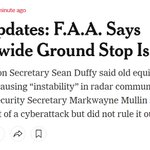
So does the US have like a secret ATC backup system, or can adversaries just target the same single point of failure and ground all US air traffic?
I keep being told the US is a super power, but all I'm seeing is bumbling middle power shit. Wym the emails and planes are down?
I meant in that specific instance.
Google's security teams are full of great people who genuinely want to make a difference, any I just sometimes disagree with the decisions they make.
Google as a company, though, is a neon warning sign pointing out the perils of late-stage capitalist societal decay brought on by a political system that puts shareholder interests above all else, in a country currently collapsing under the weight of excessive deregulation.
My personal experience with Google so far has been: their old 'featured snippet' search engine feature kept telling people I was behind the largest most damaging cyberattack in history (which I actually stopped, not created). Then when I asked them to fix it, the head of search acted like I was being a massive inconvenience for asking them not to claim I ransomed hospitals and destroyed hundreds of thousands of systems across 150 countries.
Then when they rolled out AI search, they vaporized 80% of my website traffic by having their LLM plagiarize my articles and present a slightly-reworded version to users, claiming it was "transformative" and therefore not copyright infringement. This was part of an intentional scheme to increase ad revenue by plagiarizing every website's content, keeping users on Google where they'd see Google's ads, instead of directing them to the source website (which was like the entire purpose of Google).
Trust me, there's no love lost between me and Google, or between me and this techno-feudalist hellscape I find myself trapped it. Google is easily one of my top 5 least favorite companies on the planet, but their security team does good work.
I will remain objective on issues that require it, and save my Google bashing for other times.

Definitely not the worst way the FBI has my weekend, but blasting out a warning about Artex at 3pm on a Friday was certainly a choice.
As far as I can tell, nothing new, nothing changed, activity is a month old. But it scared the customers, so now I'm spending my weekend "looking for Artex" 🥲
7
105
12,792
I'd go as far as to argue that a lot of professional software engineers couldn't build an infostealer that comes close to the ones you can rent for ~$150/month (even with the help of AI). Operating costs would likely be higher too, since in-house dev loses to economies of scale.

The other thing that kind of bugs me (pun intended), is the "31% of intrusions are the result of software exploitation" statistic.
It hides two different problems:
Zero-day exploitation - the bad guys find a vulnerability before the good guys, then use it to hack into systems (a problem finding and reporting vulnerabilities reduces).
N-Day exploitation - someone reports a vulnerability, a fix gets published, but then the threat actors rush to use the information from the fix to build an exploit before downstream users get a chance to install the fix (a problem finding and reporting vulnerabilities exacerbates).
Since organizations typically take a long time to install security fixes, N-day exploits are extremely powerful, and also make up the majority of all software exploitation. There's also 100x more people who can create N-days from known vulnerabilities than can find and exploit Zero-days.
The more vulnerabilities found, the more vulnerabilities N-day attackers have to choose from, and the more software fixes that downstream users have to juggle.
Orgs struggle to even install the monthly Windows update within a month of it going live. Now mix in "every single product you use has critical vulnerability fixes every patch cycle so you have to install all 4,000 patches every month". And yeah.... It's pretty bleak.
That's not to say vulnerability research shouldn't be done, isn't important, or isn't a net long term benefit (I feel like I have to say this because half the people on this fucking website have zero capacity for nuance and try to read every post in the most disingenuous way possible).
But since the majority of exploitation is N-day exploitation, and vulnerability research increases N-day exploitation, using exploitation rate as a justification for pouring more resources into find vulnerabilities (but not helping fix or patch them), is just circular reasoning.
Plenty of good arguments for why vulnerability research is important, but "we're showing the attackers more vulnerabilities that they can use, which is leading to them using more vulnerabilities" is not one of them.
Equal effort needs to go into all part of the vulnerability management pipeline for this to work. But currently the effort drops by a factor of 10 from finding bugs to fixing bugs, then another factor of 10 from fixing bugs to ensuring the fixes get installed.
Just reducing the disclosure window and telling everyone "don't worry, I'm sure you'll figure it out" is extremely likely to make the problem worse, not better.