

Building humanity's first outpost on the Moon. For science. For discovery. For what comes next.
- Tweets340
- Following43
- Followers78K
- Likes1.6K






ALT Close-up of an Apollo 11 astronaut’s boot in the Moon’s fine, gray soil. Photographed July 20, 1969, during the Apollo 11 moonwalk in the Sea of Tranquility region. Credit: NASA.


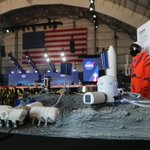
ALT From left, NASA astronauts Bob Hines, Artemis III backup crew member; Randy Bresnik, Artemis III commander, and ESA (European Space Agency) astronaut Luca Parmitano, Artemis III pilot, meet with NASA’s Orion team and get a closer look at the work underway on the Artemis III Orion spacecraft inside the high bay of the Neil A. Armstrong Operations and Checkout Building at NASA’s Kennedy Space Center in Florida on Sunday, Nov. 8, 2026.

ALT From left, NASA astronaut Randy Bresnik, Artemis III commander; and ESA (European Space Agency) Luca Parmitano, Artemis III pilot; meet with NASA’s Orion team and get a closer look at the work underway on the Artemis III Orion spacecraft inside the high bay of the Neil A. Armstrong Operations and Checkout Building at NASA’s Kennedy Space Center in Florida on Sunday, Nov. 8, 2026.

ALT NASA astronaut Bob Hines, Artemis III backup crew member, meets with NASA’s Orion team and gets a closer look at the work underway on the Artemis III Orion spacecraft inside the high bay of the Neil A. Armstrong Operations and Checkout Building at NASA’s Kennedy Space Center in Florida on Sunday, Nov. 8, 2026.

ALT From left, NASA astronaut Randy Bresnik, Artemis III commander; and ESA (European Space Agency) Luca Parmitano, Artemis III pilot; and NASA astronaut Bob Hines, Artemis III backup crew member, meet with NASA's Orion team to get a closer look at the work underway on the Artemis III Orion spacecraft inside the high bay of the Neil A. Armstrong Operations and Checkout Building at NASA's Kennedy Space Center in Florida on Sunday, Nov. 8, 2026.


ALT An overhead view looking down on NASA's Space Launch System rocket carrying the Orion spacecraft as it launches on the Artemis I mission at night. Intense orange flames and thick exhaust plume from the engines and boosters surround the pad, while the white rocket rises through the darkness, illuminated by launch pad lights. Credit: NASA/Chris Coleman and Kevin Davis


ALT A person wearing the AxEMU lunar exploration suit kneels in a simulated lunar surface test area filled with light-colored sand and scattered rocks. The suit is suspended from an overhead harness system inside a training facility to mimic reduced lunar gravity. The astronaut holds geological sampling tools while collecting a rock sample. Credit: Axiom Space

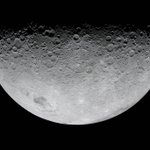
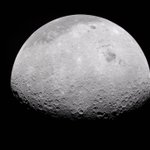
ALT A detailed view of the Moon’s heavily cratered surface, captured by the Artemis II crew on April 6, 2026. Credit: NASA

ALT A view of NASA’s Orion spacecraft during the Artemis II mission on April 6, 2026, showing part of the spacecraft on the left, the Moon on the right, and Earth just beyond the Moon’s edge. Credit: NASA

ALT A view of the Moon’s heavily cratered far side in the foreground, with a small, crescent-shaped Earth visible in the distance during NASA’s Artemis II mission. Sunlight illuminates portions of both celestial bodies against the darkness of space, while faint reflections from the spacecraft window appear on the right side of the image. Credit: NASA.


ALT Nike Lin, a support engineer/technician on the thermal vacuum team, takes weight measurements of batteries following thermal vacuum testing. Credit: NASA/Ryan Hill

ALT Researchers are testing solid-state batteries in a TVAC (thermal vacuum chamber). The batteries could provide power in extreme environments like the Moon. Credit: NASA

ALT Yi Lin, left, SPEARS testing and research lead, and Ji Su, a polymer materials scientist and the task lead, during the removal of SPEARS batteries from thermal vacuum testing at NASA Langley. Credit: NASA/Ryan Hill


ALT Poster reading “Journey to Titan: Fly your name to another world!” showing NASA’s Dragonfly rotorcraft flying over Titan’s orange dunes above two sample Dragonfly boarding passes, one in English and one in Spanish.


ALT Artist's illustration of astronauts in bulky white space suits collecting rocks on the dimly lit surface of the lunar South Pole. Rovers and excavators work nearby, habitat modules are in the background, and solar panels collect sunlight in the distance.


ALT The NASA “meatball” logo, a blue circle with white stars, a white orbital ring, a red chevron swoosh, and the white letters “NASA”, sits in the center of a dark image filled with white, gold, and blue stars of varying brightness.


ALT Extravehicular crewmember 1 (EV1) Jeff Williams' camera view of the American flag on his Extravehicular Mobility Unit (EMU). Image was taken during Extravehicular Activity 37 (EVA 37). Credit: NASA