

The California Institute of Technology aims to expand human knowledge and benefit society through research integrated with education.
Pasadena, CA
Joined September 2008
- Tweets10.6K
- Following610
- Followers131K
- Likes11.7K


Caltech retweeted

Did you know? IPAC’s own George Helou is on Voyager’s Golden Record! That’s him on the right, demonstrating how humans drink liquids 🥤
Today, Voyager 1 will be one light-day from Earth: the distance a particle of light can travel in 24 hours, or about 16 billion miles 🤯

Caltech retweeted

Biology can now generate hundreds of terabytes of data about a single person’s brain, lungs, and liver, down to how the mRNA and protein molecules in each cell are behaving. @Caltech’s Matt Thomson tells @PatrickMoorhead how his lab trains virtual tissue models on Parkinson’s brain data to predict how therapies will work. $GOOGL
Caltech retweeted

In 1977, NASA launched Voyager 1, a robotic space probe built to explore the farthest reaches of our solar system. It was supposed to be a 5-year mission.
Nearly 50 years later, it's still going. abcnews.link/PUpMNdS

Caltech retweeted
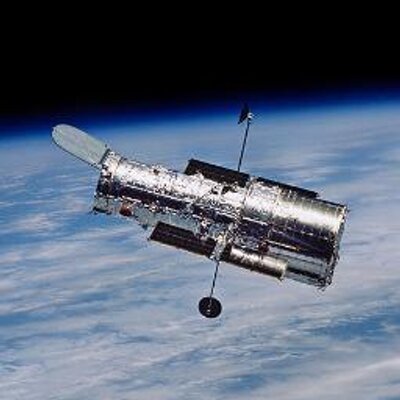
Voyager 1 is almost an entire light-day away from Earth! That's an incredible distance, and the farthest ever traveled by a human-made object.
Did you know Hubble's helped the Voyager spacecraft by providing an interstellar "road map"? Find out how: science.nasa.gov/missions/hu…
And join the celebration here ⬇️


Today is the day! 💫 Tonight, after sunset, join people around the world in sending a signal skyward to celebrate Voyager 1's incredible journey and its milestone of reaching one light-day from Earth.
Learn more: go.nasa.gov/4zpgtS0

Caltech retweeted

We've got a mission for you! 🌟
NASA’s Voyager 1 will soon reach one light-day away from Earth, and NASA invites the world to participate in a global symbolic wave of golden light to mark this historic moment.
Here's how you can participate: go.nasa.gov/shinebright

Caltech retweeted

Voyager 1, the farthest human-made object, is now one light-day from Earth ctvnews.ca/sci-tech/article/…

Caltech retweeted

BREAKING 🚨: NASA's Voyager 1 just became the first human-made object to reach one light-day from Earth
Light now takes a full day to reach it


Caltech retweeted
In 1977, NASA launched Voyager 1, a robotic space probe built to explore the farthest reaches of our solar system. It was supposed to be a five-year mission.
Nearly 50 years later, it's still going. abcnews.link/yeyCiCu


Caltech retweeted

VOYAGER 1 MILESTONE: NASA's Voyager 1 probe, which has been traveling through space for nearly 50 years, hit a milestone distance of one light-day away from Earth on Wednesday.
Already the most distant man-made object in the universe, the spacecraft is now about 26 billion kilometers (16 billion miles) away, according to the U.S. space agency.
That is the distance a particle of light can travel in 24 hours.

Caltech retweeted

Nearly 49 years after launching on one of humanity's greatest journeys from Florida's Space Coast, Voyager 1 is now so distant that a signal from the spacecraft takes 24 hours to reach Earth.
Celebrate its cosmic journey with us tonight!
Today is the day! 💫 Tonight, after sunset, join people around the world in sending a signal skyward to celebrate Voyager 1's incredible journey and its milestone of reaching one light-day from Earth.
Learn more: go.nasa.gov/4zpgtS0
Caltech retweeted

Voyager 1 captured this picture on this day in 1980, while looking back at Saturn just a few days after its closest approach to the ringed planet. The approximate distance at the time of the shot was 3.3 million miles.

ALT An image of Saturn highlighting its rings, set against a dark background.
Caltech retweeted

JUST IN: NASA’s Voyager 1 officially becomes the first human-made object to reach 1 light-day from Earth.

Caltech retweeted

🌌 NASA's Voyager 1 probe, which has been traveling through space for nearly 50 years, hit a milestone distance of one light-day away from Earth.
➡️ u.afp.com/SFsg

ALT This NASA image shows an artist's rendition of the Voyager spacecraft.

Caltech retweeted

BREAKING:
The Voyager 1 spacecraft has reached a distance of one light-day from Earth after 49 years in space.
It’s the most distant human-made object from Earth

Caltech retweeted

After 49 years, Voyager 1 is now one light-day from Earth cp24.com/news/world/2026/11/…


Caltech retweeted

Gold for Voyager 1, now one light-day from home. 🚀 @NASA
Caltech retweeted

Let's talk about Voyager 1 and 2!
Join us Nov. 19 for a status update on the twin probes and a discussion of their unique mission. Plus, we'll have a Q&A session and a sneak peek at the upcoming NASA+ Voyager documentary. go.nasa.gov/4k942pz

ALT An artist's concept of the Voyager spacecraft, with its long antenna pointing down and to the right in the direction of Earth. Earth isn't visible in the image, but Voyager is among the stars. In the background, there is also a long, deep blue ribbon of gas and dust stretching from the bottom of the image to the top.