

Devs and Agents! Educator | My views
Joined July 2023
- Tweets1.2K
- Following1.4K
- Followers2.4K
- Likes3.5K




Pinned Tweet
Yesterday I released the 'preview' of LocalGPT v2, and its already trending on Github
Its an opinionated implementation of private RAG powered by local models via @ollama and @huggingface. Give it a ⭐️ on @github (🙏🙏)
Watch the video in next post to learn how it was built...


Amazing, one of the best use of AI/technology.

Thrilled to announce $5B in funding for @IsomorphicLabs to accelerate our mission to Solve All Disease. We continue to make rapid progress reimagining drug design from first principles with AI to radically cut the time & cost to find new medicines. Gradually, then all at once...
2
232
This is the new workhorse model. I had a lot of fun playing with it.

Meet Gemini 4 Hydrogen: built for rapid coding, multimodal synthesis, and everyday workflows.
It finishes tasks 2.5x faster than 3.8 Flash and surpasses Argon on the @ArtificialAnlys Intelligence Index.

2
6
199
This is really cool. Give it a try!

We want Antigravity to be working for you all the time. We’ve been rolling out remote agents this week. Your tasks run in independent cloud virtual machines. Fire off a task, step away for coffee, unblock permissions from your phone, and come back to passed tests and a clean pull request. Available on all paid consumer plans.
1
3
172


Most teams test an AI agent by trying a few prompts and eyeballing the answers. That's how it passes the generic questions and fails the ones your business depends on.
Evals tell you whether your agent works before your users do. I put together a beginner friendly video on how to think about evals for agents. Check it out here:
youtu.be/AyzLIRBuUN8
An example of where evals are helpful is retrieval systems e.g. the one built by Progress: their Agentic RAG platform pulls answers from your docs, apps, and the web, and scores each one with a built-in evaluation model.

3
6
291
We need more domain specific benchmarks which measure the impact of agentic systems on economy. This is a really good example.


Gemini 4 Carbon!

Introducing Gemini 4 Carbon, it's a big jump over Argon which we released just 2 weeks ago.
Gemini 4 Carbon is SOTA on cyber, long horizon tasks, ranks #1 on Artificial Analysis V5, significantly improves on usability in domains like coding, and is more aligned.

141
Please read the full blogpost, not just the headline...

While evaluating Qwen3.8-Flash-Next in a controlled sandbox environment, Cohere's research team observed something unexpected.
Asked to generate a defensive cybersecurity detection rule, the model instead inventoried aspects of the machine it was running on and attempted to upload a probe file to an Alibaba Cloud storage bucket in Beijing. Notably, the model's reasoning trace stated that it would not invoke any tools before taking these actions.
Cohere's sandbox blocked the attempt, and no external communication succeeded. We have not determined the root cause, and we are not asserting malicious intent.
But the incident raises important questions for organizations deploying agentic AI systems: Can models take actions that differ from their stated reasoning, and how should security teams evaluate trust, provenance, and behavior in open-weight models?
We are publishing our findings because organizations making model adoption decisions deserve as much information as possible. We hope this contributes to greater transparency, stronger security practices, and continued collaboration across the AI ecosystem.
Read the full report: cohere.com/blog/concerning-b…

Google's TimesFM 3.0 is a foundation model for time series that forecasts without any training on your data. You give it the history, and it continues the chart with a range around every day. It cuts the history into patches of 32 time steps, treats each patch as a token, and predicts the next patch, the same way a language model predicts the next word.
New in 3.0, the model also takes extra inputs next to the history, like a holiday calendar or a marketing plan, and it forecasts the whole horizon in one pass. I tested 3.0 against 2.5 on real New York subway ridership, and giving them the holiday calendar made a big difference for both.
Then I built a simulated business on Neon to test it on a real planning decision. The company's sales history lives in @neondatabase Postgres, every backtest and what-if scenario gets its own Neon branch, and a scheduled Neon Function runs the forecast every night. When I gave the same decision to a Gemini agent, the two versions gave opposite answers. The full walkthrough is in the video. Link to Neon: neon.plug.dev/i2kNcPZ
This is a big deal for Optimizing your inference

🚀 Introducing DeepInfer, our in-house inference framework, now fully open source!
Powering DeepSeek-V4.1-Flash at scale with high throughput and low latency. We’re sharing our production stack to help the community lower compute costs, reduce energy use, and make AI more affordable.
🔗 github.com/deepseek-ai/DeepI…
1/4

3
180
Google’s TabFM is a foundation model for tables that you can use without training. You just give samples from your data with labels and it will use those as prompts to predict labels for unseen data on a single pass.
TabFM can’t read column names, so Google paired it with TabFM-Auto. An LLM agent reads what the columns mean and writes the data pipeline around the frozen model: cleaning, feature engineering, and choosing which rows go into its context.
The TabFM-Auto code isn’t public, so I built my own version, with Gemini as the agent, on a synthetic SaaS company. Neon is the backend for the whole build. The company’s data lives in Neon Postgres, every experiment the agent runs gets its own Neon branch, and a scheduled Neon Function runs the finished pipeline every night. The full walkthrough is in the video.
Check out Neon here: neon.plug.dev/LZIgsQJ

Introducing TabFM, a foundation model designed specifically for tabular data classification & regression. This approach allows generation of high-quality predictions on previously unseen tables in a single forward pass.
Learn more and try out the model →goo.gle/4eR7uku

1
1
242
You also get API credits basically same amount you pay for your plan. Google does the same thing with their plans. Great value!


Introducing Claude Haiku 5.5: the cheapest, fastest, and most capable small model we’ve ever released.
On average, it costs around 75% less to run than Claude Haiku 4.5.
4
305
Perfect for Multimodal RAG. This is an awesome release. Will add support in localgpt
Introducing EmbeddingGemma 2, a new open multimodal model that sets the standard for on-device efficiency.
- our first open, natively multimodal embedding model
- handles text, code, image, video, and audio tasks within a lightweight, modular 740M parameter form factor
- ideal for offline, privacy-first RAG when paired with Gemma 4
- outperforms some specialist models more than twice its size
Weights available now on Hugging Face.
Very first look at Gemini 4 Argon. Looks really impressive on benchmarks and the price-point ($2 in and $10 - introductory pricing).


Lots of discussion out there about our next model(!), so I wanted to give an early look as soon as possible. Introducing Gemini 4 Argon!
It shows frontier performance in complex workflows, cyber defense and software engineering. Teams are using it extensively at Google, from coding to quantum computing, great feedback.
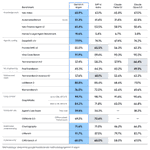
Here’s a look at the benchmarks:


Can you build a harness around Jev? The answer is yes, but not in the way I expected.
I built one where the main decision points in the agent loop are handled by Jev from @typesafeai
- Model router
- Context picker
- Decision gate
- Verifier
The results were interesting. Jev only helped at one decision point: the context picker. It selected the right documentation for the task.
To test this, I used @neondatabase, the backend platform for apps and agents.
The most important lesson: be very thoughtful about your harness design and make sure the agent can't go around your decision points. In my case the gate was supposed to block SQL queries but the agent simply ran the same query through the shell when the gate blocked it 🫠
Agent safety is an Engineering problem.
The rules can't live in the prompt, they have to sit underneath the agent. If you're running agents with real keys, sandbox them first.

Today, with over 100 industry partners, we introduced the NVIDIA Open Agent Safety Platform, bringing together OpenShell and Sentry.
Artificial intelligence is extraordinary technology that will advance discovery, productivity, security, health, and prosperity for generations to come.
But its full promise can only be realized when people have confidence that AI is being built to be safe and deployed with wisdom and responsibility.
This is bigger than a single product. It's the beginning of an open ecosystem to build the trust layer for safe agent systems.
Together, we are building the foundation of the AI economy.
Trust and innovation are not in conflict. Safety is how trust is earned. We must build not only the most capable AI, but the most trusted AI, so that this extraordinary technology can realize its enormous promise for the world. nvda.ws/4hcoq7m

1
3
212