

Protect Your Every Transaction. User App: https://www.teapawt.org/t.co/FHHKZyzH1j 🛡️ Dev Integration: Security Intelligence & SafeToken Protocol 🛡️
On-Chain
Joined May 2021
- Tweets3.9K
- Following1.1K
- Followers416K
- Likes3.2K





Pinned Tweet
📢GoPlus #DeepScan Comprehensive Upgrade: A New Paradigm of AI-Powered Smart Contract Security.
Smart contracts hold funds — and hackers are already using AI to uncover deep-layer vulnerabilities. One-time audits can no longer keep pace with today's attack-defense dynamics. The industry must evolve toward AI-powered, continuous security: higher efficiency, lower cost, full-lifecycle protection.
GoPlus DeepScan delivers three interconnected modules forming a closed-loop, continuous security service for the entire smart contract lifecycle: AI Contract Audit, Continuous Security Monitoring, and Token Security Self-Check.
Features
AI Auditing
AI-powered deep analysis of contract source code, permission management, and business logic. Systematically detects syntax vulnerabilities and business-logic flaws, and delivers a structured audit report — including security scores, key findings, issue details, and remediation recommendations.
Security Monitoring
Post-audit, always-on assurance for live contracts. Tracks newly disclosed vulnerabilities, on-chain attacks, and status changes in external dependencies (oracles, cross-chain bridges) in real time. AI continuously assesses impact, triggers targeted re-reviews, and issues alerts — moving beyond the "audit as finish line" model.
Token Security Checking
A rapid pre-launch self-inspection tool for tokens preparing to launch or list. Identifies common high-risk characteristics in minutes, including: Honeypot detection, Malicious mint detection, Blacklist mechanism detection, Abnormal buy/sell tax detection, Owner privilege & trading restriction risks.
Benchmark
An open-source benchmark built from real-world attack incidents. Extracts vulnerable contract source code from attacked projects to systematically evaluate AI capabilities in vulnerability identification, attack-path understanding, contextual reasoning, and audit stability. Nearly 100 real, representative attack cases from May 2025 to date, continuously updated.
Use Cases
Developers — Cost-effective, high-efficiency security scanning with audit-grade quality, enabling fast, confident innovation.
Project Teams — Pre-launch scanning as a complement to traditional audits; continuous auditing and monitoring during operations to stay ahead of attackers.
Exchanges — Enhanced pre-listing security review efficiency and capability; continuous monitoring as routine risk control to catch new threats early and minimize post-listing incidents.
Get Started
GoPlus DeepScan is live — try it now: **deepscan.gopluslabs.io/**
AI Auditing Benchmark: github.com/GoPlusSecurity/ai…

🚨 OpenJDK “Java4Shell” Vulnerability Alert
On November 17, 2026, Oracle and the OpenJDK project released security updates addressing CVE-2026-114938, a memory corruption vulnerability dubbed Java4Shell. The flaw affects HotSpot’s AVX-512 VBMI-accelerated Base64 decoding intrinsic and can lead to heap data disclosure, JVM crashes, and potentially remote code execution (RCE).
Oracle assigned the vulnerability a CVSS 3.1 score of 8.1 (High). A proof of concept and technical details are publicly available, although application-specific exploit chains remain withheld. Developers should assess their exposure and patch as soon as possible.
📌 Affected Versions and Exploitation Conditions
Affected releases include OpenJDK 17.0.6 and later unpatched builds in the Java 17, 21, 25, and 27 release lines. Distributions incorporating the affected code are also impacted, including Amazon Corretto, Eclipse Temurin, Azul Zulu, Microsoft Build of OpenJDK, and Red Hat OpenJDK.
Exploitation typically requires all of the following:
- An affected, unpatched Java runtime.
- An x86-64 processor supporting AVX-512 VBMI and the associated required CPU features.
- The vulnerable Base64 decoding intrinsic active in the JVM.
- Attacker-controlled data reaching the affected Java Base64 decoder.
ARM64 systems and x86-64 systems without AVX-512 VBMI support are unaffected. Standard OpenJDK 8 and 11 are also unaffected. However, certain Oracle Java SE 8 Enterprise Performance Pack releases are affected.
Researchers at Calif demonstrated pre-authentication RCE in controlled environments against Jira, Confluence, Jenkins, Keycloak, Artifactory, and PingFederate, as well as post-authentication RCE against Kafka, Solr, Elasticsearch, Gerrit, and Spinnaker. Exploitability depends on the application and deployment; there is no universal exploit.
🛡️ Security Recommendations
For Oracle JDK, upgrade to the following patched releases or later vendor-supported security updates:
- Java 17: 17.0.21.1
- Java 21: 21.0.13.1
- Java 25: 25.0.5.1
- Java 27: 27.0.1.1
- Oracle Java SE 8 Enterprise Performance Pack: 8u513-perf
For other OpenJDK distributions, follow the respective vendor’s security advisories and install the appropriate patched builds.
Restart affected JVMs after upgrading. For containerized applications, rebuild and redeploy images containing the patched runtime. Update bundled or embedded JREs using the method supported by the product vendor.

3
1,107

🚨 GoPlus Security Alert: Widespread Malicious Code Injection in Optimizely Web Customer Projects
On November 16, attackers injected malicious code into custom JavaScript across multiple Optimizely Web customer projects, causing affected websites to serve malicious content through previously trusted scripts. The incident affected 178 organizations, including websites operated by CNN, Zoom, BBC, GitLab, and Ledger.
The malicious code attempts to swap crypto recipient addresses for attacker-controlled addresses on pages, in input fields, and in the clipboard. It can also skim payment card details entered into affected sites’ forms, steal non-HttpOnly cookies, capture page screenshots, and deliver Coruna / DarkSword exploits targeting certain iOS devices. Card details inside hosted payment iframes, such as those from Stripe and Adyen, were outside the script’s direct reach.
For attacker addresses, which have received approximately $7K, and the list of affected websites, see:
blog.report-uri.com/worlds-l…
GoPlus has blocklisted the attacker addresses. Exercise caution on affected sites and double-check recipient addresses before sending funds.
🛡 Security Recommendations
Website operators: Inspect custom code in your Optimizely projects and experiments. Review accounts, API tokens, and write permissions. Monitor third-party scripts for changes and unexpected outbound connections.
Crypto users: Review recipient addresses you copied or entered on affected websites on November 16, along with any transactions you initiated. Always double-check recipient addresses before sending funds, and watch for unauthorized transactions.
iOS users: Update to the latest iOS or iPadOS version available for your device. Report URI notes that the exploit kit’s own comments identify versions 18.7.3 and later, and 26.3 and later, as patched. Monitor your wallets for unauthorized transactions.

#Lighter Incident Breakdown: Nonce Reuse in Custom Signing Code Enabled API Private Key Recovery
1️⃣ Affected Accounts
An attacker derived the API private keys for two trading accounts on Lighter and used them to move funds out of those accounts. Approximately $15.48M was reportedly affected, with around $5M in USDC recovered and returned to the affected trader by the Lighter Security Council.
Reported affected accounts:
Account 1:
Lighter Account ID: 714710
Associated onchain address:
0x0d1D09312665D31Ed68231b88079a245E0458F6F
Amount affected: ~$10.39M
Account 2:
Lighter Account ID: 714723
Associated onchain address:
0x66Cf2f85115CC20bF439720927C1f93De9672068
Amount affected: ~$5.09M
2️⃣ Root Cause
The affected accounts used insecure, unofficial signing code that reused cryptographic signing nonces across different transactions. This allowed the attacker to derive the API private keys from publicly available signatures.
Lighter said its protocol, smart contracts, and official SDKs were unaffected.
The attacker moved the funds through the following sequence:
Create a public pool using the compromised account → Mint pool shares to an attacker-controlled account → Transfer the victim’s funds into the pool, increasing its net asset value (NAV) without issuing corresponding shares to the victim → Redeem the attacker’s shares and withdraw the funds.
3️⃣ Funds Withdrawn
The attacker withdrew approximately 10.39M USDC from Lighter and swapped the proceeds for ETH. Onchain tracing identified part of the proceeds moving through multiple wallets to buy XMR1 on Hyperliquid.
XMR1 should not be conflated with native Monero ($XMR). The available evidence does not establish that these purchases drove up Monero’s price.
4️⃣ Reported Attacker Account and Address
Lighter Account ID: 769455
Associated onchain address:
0xb3fffca23d4444eE73349825ACD84f7b5020e387
🛡️ Security Recommendations
▪️ Use Lighter’s official Python, Go, or TypeScript SDKs, or its Agent Kit. Avoid implementing your own signing logic.
▪️ Let the official signer handle cryptographic signing nonces. Never reuse a signing nonce or substitute timestamps, counters, weak random values, or cached values. Signing nonces are distinct from transaction nonces.
▪️ If your code may have reused signing nonces, revoke and replace all related API keys immediately. Fixing the code alone isn’t enough.
▪️ Enable IP allowlisting and per-key permissions and limits as they become available. Separate permissions for trading, transfers, pool creation, and redemptions wherever supported.
▪️ Lighter now requires wallet signatures for transfers into public pools and no longer exposes API signatures publicly.


1/7
⚠️ Exploit Analysis:
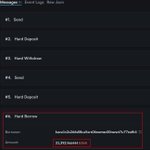
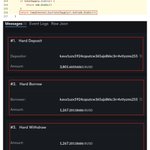
On November 14, @KAVA_CHAIN’s native lending protocol Kava Lend was exploited. The attacker reduced the net supply of its largely inactive BUSD market to just 2 base units, inflating the market’s supply interest index by approximately 243,000× in about three minutes. The attacker then used inflated BUSD deposit claims to borrow 55,205,050.60 KAVA across 127 transactions—worth approximately $3.76 million at the pre-attack price.
🔍 Root Cause:
Kava Lend uses the supply interest index, supplyInterestFactor, to distribute interest paid by borrowers to depositors. It divides the interest accrued since the previous block, newInterest, by the market’s net supply, totalSupply (cash + borrows − reserves). The public code skips the division and returns a neutral factor when net supply is exactly zero, but does not guard against a positive yet extremely small denominator. When totalSupply approaches zero while remaining positive, the resulting supply interest index can become massively inflated.
github.com/Kava-Labs/kava/bl…
The attacker first repaid all 37 outstanding BUSD loans on behalf of their borrowers, then used a single deposit–borrow–withdraw transaction to reduce net supply to 2 base units (2×10⁻⁸ BUSD). The tiny amount of interest accrued each block was then divided by these 2 base units, causing the index to rise from approximately 2.76 to 671,186.99—roughly 243,000×—in about three minutes. As a result, the main wallet’s previously deposited BUSD was recorded as a claim worth approximately 1.25449 billion BUSD.
The attacker then used a second wallet in a loop: the helper wallet deposited BUSD as collateral; the main wallet withdrew the same BUSD against its inflated deposit claim; and the helper wallet borrowed KAVA at a loan-to-value ratio of approximately 50%. In the next block, the main wallet liquidated the helper wallet. Despite there being almost no BUSD left in the pool to seize—the first liquidation auction had a lot of 0 BUSD—the loan was still closed, freeing up capacity under the KAVA borrowing cap. The configured maximum_limit for ukava was equivalent to 448,358 KAVA.


The public incident report on the November 14 HARD Lend security incident is now available.
The identified exploit has been blocked. Kava Chain’s underlying security was not compromised.
Read the official report:
medium.com/@Kava_Chain/hard-…

2/7
🔗 Attack Sequence:
1️⃣ Repaying all outstanding BUSD loans
The main wallet, kava1uzx5924cqsutcw365ajs8kkc3rr4vtlyzms255, submitted 37 MsgRepay messages in a single transaction, repaying every outstanding loan in the market. This replenished the pool’s available cash and reduced outstanding borrows to zero.
Transaction:
mintscan.io/kava/tx/6C00E9ED…

1
427
⚠️ Cursor has published a security incident report on the earlier supply chain attack. According to the investigation, the attacker used access keys issued by Cursor to Fireworks and subsequently exposed on Fireworks’ side to gain access to some of Cursor’s SaaS services and internal systems. The attacker ultimately tampered with the distribution cache for the Claude Code extension to collect information about users’ machines and install SSH backdoors.
cursor.com/cn/blog/security-…
The compromised versions were Anthropic.claude-code 2.1.312 and 2.1.313 in Cursor’s VS Code extension marketplace distribution cache, affecting macOS and Windows. The exposure window ran from October 29 at 17:27 to October 30 at 04:35 (UTC+8), with up to approximately 5,000 users affected.
Security recommendation: If you installed or updated to either affected version through Cursor’s marketplace during this window, read the official notice as soon as possible and run the remediation script for your platform to check for and remediate any compromise:
cursor.com/cn/blog/claude-co…
Fireworks’ initial announcement and subsequent update:
fireworks.ai/security/bullet…
fireworks.ai/security/bullet…
🚨 GoPlus Security Alert:
Telegram’s recently introduced HTML widgets feature poses a remote code execution risk. Security researchers have demonstrated the issue through bot messages on Android and Desktop. Although Telegram has rolled out some fixes, patch coverage remains incomplete, with potential bypasses still possible, particularly on PC.
🛡️ Security Recommendations:
1. Avoid interacting with unknown bots, and do not click “Start.”
2. Do not open unfamiliar chats or suspicious links.
3. Once a complete fix is confirmed, promptly update to the latest version of Telegram.
4. Trust only officially verified channels.

Here's another RCE that works on the "patched" Windows @telegram client.
Even if individual bugs get patched, allowing (unsandboxed!) QuickJS in messages massively opens up the attack surface.
🎉 OpenFour × GoPlus launch their Ecosystem Incentive Program with up to $500,000 in prizes for next-gen launch mechanisms. GoPlus offers free token security audits for selected mechanisms, helping developers spot common contract risks earlier.

🚨 GoPlus Security Alert:
At approximately 18:45 UTC on November 10, 2026, Across suffered a DNS hijacking attack. The attacker gained control of Across’s domain through a social engineering attack targeting Namecheap and replaced the official Across website with a phishing site.
⚠️ Total user losses are estimated at $350,000, with funds stolen from user wallets on Ethereum, Arbitrum, Base, BNB Chain, Ink, and Plasma. The malicious phishing page lured users into signing one or more of the following types of authorizations or transactions:
1. EIP-2612 permit: The attacker submits users’ off-chain signatures on their behalf, then calls transferFrom to transfer their tokens.
2. Permit2 authorization: A malicious spender transfers users’ assets through the canonical Permit2 contract.
3. Direct approve calls or other transaction-based authorizations.
4. In some cases, users may also be tricked into transferring funds directly.
Malicious spender addresses used by the attacker—check and revoke any associated approvals immediately:
0x46a2a474d4c22bf1ae4f8fa55da7a58673472be2
0xdbd7fbe5b7cd56f99c059dc24052009d2626125c
0x5ff35703c22533398d5c7ce7acd32a04ac8462da
0x2ff67cddd9ff45e0b47957d9d7c19b0732f9c514
0x373c415ef034bb620e8d720afd2ace26bca13529
0xdcd65e3a8f3b73c7e2f40dbab1fb95dbef871d6c
0x3ef438c34ce51a697a24247fe033c4562c94f0fd
0x0c894c253c62eda066197011efd73b632dc96263
Addresses identified by Across as recipients of stolen funds:
0x2846e69d3298e99eddf2fd8116e952844da11fde
0x0c7c656126aa62625fdd8051eb69dc14aee8d37b
0x3ef438c34ce51a697a24247fe033c4562c94f0fd
0xa0e6c7d79b74d1a6d366dd11309b6faafda05ac5
🚑 Recovery Update:
At 01:16:45 UTC on November 11, 2026, Across announced that it had regained control of its domain and restored its systems. It also committed to compensating affected users. A full post-mortem report will follow.
🛡️ Security Recommendations:
1. Stay alert if a website behaves unexpectedly or differs from your previous experience. DNS hijacking can redirect you to a malicious clone of the legitimate site.
2. If you signed a suspicious transaction or noticed an unexpected transfer, investigate the cause immediately and move your remaining assets to a newly created, secure wallet as soon as possible.
3. Use tools such as the GoPlus security extension to check and revoke suspicious approvals as soon as possible.

Across is fully restored, and all systems are operational.
across.to is back under our control, and all Across systems are working normally.
Thank you to the Namecheap founder, @synth for responding on X, helping us secure our account and opening an investigation into how this happened.
All affected users will be made whole. We’ll share a full post-mortem in the coming days.
While the domain was compromised, @SEAL_911 helped us get across.to flagged as phishing. If you still see a warning in your wallet or browser, it should clear soon.
We will only communicate through official Across channels. Don’t trust messages, links or DMs from any other source claiming to be from the team.

⚠️ Keep your phone and computer updated to the latest OS version. More importantly: don’t install sketchy software or click unfamiliar links!

A vulnerability (worse_query) affecting iOS 26.7.1, 27.0.1, and 27.2 allows malicious apps to read local files from other apps, putting seed phrases, private keys, and login credentials at risk across the entire ecosystem. This is an iOS-level issue, not unique to Binance.
Immediate Action Required:
- Delete any apps installed from untrusted sources (such as sideloaded or manually signed IPAs).
- Update iOS and all apps to the latest official versions.
- If you suspect a breach, transfer funds to a new wallet created on a clean device and reset all active login sessions.
Never install unauthorized packages, and keep your software up to date.
Readers added context they thought people might want to know
Binance recommends updating iOS to the latest versions against worse_query, but researchers describe it as an unpatched 0day and Apple's iOS 27.2.1 notes omit any such fix.
github.com/forcequitOS/wo…
support.apple.com/en-us/149715
x.com/0xjohnny/statu…
1/8
⚠️ Exploit Analysis: Ankr Cross-Chain Bridge Attack
On November 9, @ankr’s cross-chain bridge contract on #Ethereum was exploited, resulting in losses of approximately $300,000. The attacker submitted five forged cross-chain withdrawal receipts, all referencing the same legitimate deposit transaction on #Optimism, but with altered recipients, tokens, and withdrawal amounts. All five receipts carried valid signatures from the bridge’s trusted consensus/notary signer. The bridge contract’s withdraw() function approved the withdrawals without independently verifying that the corresponding assets had actually been deposited on the source chain.
🔍 Root Cause:
The Ankr Ethereum bridge delegates verification of source-chain deposits to a trusted notary/consensus signer. On the destination chain, withdraw() releases assets according to the fields in a withdrawal receipt as long as it carries a valid signature, without enforcing a one-to-one, non-reusable binding to the corresponding source-chain event.
As a result, if an attacker obtains—or manages to forge—withdrawal receipts that validate against the trusted signer, they can:
Reuse a historical, legitimate #Optimism deposit transaction hash as a reference for the “source proof.”
Alter the recipient, token, and amount in the receipts to withdraw multiple assets repeatedly against the same source transaction.
Bypass detection because the bridge only validates the signatures and receipt structure, without verifying whether a corresponding deposit exists on the source chain for the specified amount, token, and recipient.
The attacker submitted five forged receipts and drained the bridge contract. All five signed receipts referenced the same Optimism source transaction, but specified altered recipients, tokens, and amounts. The notary signer for all five was 0x4069D8A3dE3A72EcA86CA5e0a4B94619085E7362.
The implementation of withdraw() shows that the contract performs no checks on rawReceipt. How the attacker obtained signatures valid for the notary address, _consensusAddress, remains unknown. A compromised private key or signatures obtained through social engineering are suspected.

2/8
🔗 Attack Flow:
1. Sweeping operational wallets and consolidating funds
Native ETH was swept from multiple Ankr-related operational wallets, including the notary address 0x4069…7362, as well as 0xf337…4add, 0x102a…ea85, 0x8e70…49f4, and 0x9846…bb9a, alongside operational wallets on Arbitrum and Linea. The funds were consolidated into 0x4Ea3da46a7B15b50A519D6f8e79eE02Cd6bFe2D2.
Example transaction: approximately 1.8 ETH transferred from the notary address to the consolidation wallet:
etherscan.io/tx/0xec3bec8779…

1
2
452
Thank you @CoinDesk for covering GoPlus’s H1 2026 progress. We’re extending our security capabilities from Web3 users and transactions to autonomous execution—protecting both #Web3 and #AI systems.

RESEARCH: With hacks, exploits and cyber threats intensifying - including the largest CEX hack on record - continuous security monitoring is becoming increasingly critical.
@GoPlusSecurity’s product suite now spans both Web3 users and autonomous agents, extending protection across on-chain activity and autonomous execution.

🚨 GoPlus Security Alert:
Keplr wallets affected by a Web3Auth social-login vulnerability. Some users’ private keys were exposed or signing capability was compromised. At least ~$1M stolen; ~$6M moved to an official recovery address.
Impacted users: Keplr addresses created via Google or Apple login. Seed-phrase and hardware-wallet users are not affected.
Attacker-related addresses:
0x531f1d541fec4a6a6439e7651620f66f8d854c1d
0xeaaa5fca4c7daa7bb99b3ece6da68040f916d857
0x08b7173a877e2ac83727550a5a355ae89aaf3e23
0xeeb6a049c69eb1ffe98745260b563b8edd1af29c
0x191679e0cbce09216383255a2a6e90eea59dea6d
🛡 Security Recommendations:
1. Follow official announcements only. Ignore fake “asset recovery” links and DMs. Never share your seed phrase or private key.
2. Stop sending new funds to the original social-login account. Do not re-import or reuse the old keys.
3. Create a fresh seed-phrase or hardware-wallet account. Move any liquid assets you still control to the new address. Use a hardware wallet for larger amounts.
4. Handle staked, locked, or unbonding assets according to the latest official guidance.

Web3Auth has verified the following addresses as related to the recovery efforts, not malicious/exploit addresses:
Cosmos Hub
cosmos1atuap9kfnt6y8ykvn3437e7j3z8qffh3qtnmwu
Osmosis
osmo1atuap9kfnt6y8ykvn3437e7j3z8qffh3gsqtcw
Celestia
celestia1atuap9kfnt6y8ykvn3437e7j3z8qffh33pzt53
Akash
akash1atuap9kfnt6y8ykvn3437e7j3z8qffh3ds7uhx
Noble
noble1atuap9kfnt6y8ykvn3437e7j3z8qffh3ggxnkj
Injective
inj1lqmdmuczn5rxn5jkc34wwrqdeh70etpf5wvt7g
dYdX
dydx1atuap9kfnt6y8ykvn3437e7j3z8qffh3fjalwt
Babylon
bbn1atuap9kfnt6y8ykvn3437e7j3z8qffh3h4z239
Axelar
axelar1atuap9kfnt6y8ykvn3437e7j3z8qffh3y99n9a
Saga
saga1atuap9kfnt6y8ykvn3437e7j3z8qffh37c2ff6
Agoric
agoric1atuap9kfnt6y8ykvn3437e7j3z8qffh3jk3y72
EVM
0x413e4F4De7E5FF010913488F781E679e76f706dA
Please refer to Web3Auth's official channels for updates on the recovery process and beware of impersonators or fraudulent recovery requests.
On certain affected Alpine Linux setups, a logic collision between OpenSSH and the underlying musl libc lets an attacker bypass password auth and potentially reach root by simply feeding 257–1024 characters into the password field.
Recommend upgrading the packages and restarting sshd, or fully disabling password login in `/etc/ssh/sshd_config`.

The bug is like a joke.
On Alpine Linux, type 257 to 1024 characters of anything and you get root. 💀
Readers added context they thought people might want to know
Exploitation requires specific conditions, not just typing a long string anywhere on Alpine: sshd built without PAM, password auth enabled, a target account with a '*' password field, and another local account with $5$/$6$ hashes. Root login also must be explicitly permitted. alpinelinux.org/posts/2026-11-… openssh.org/releasenotes.h…
3
11
3,574
⚠️ #iPhone Security Warning: Update to the latest iOS version and check your device for malicious apps as soon as possible!
SEAL recently reported asset losses among several users of self-custody wallets on iOS, including multiple Trust Wallet users and one Uniswap Wallet user. Losses reported so far total approximately $561,000.
Based on the information currently available, we suspect these cases may be linked to the recent wave of iOS-related cybercrime. In these iOS attacks, attackers exploit unpatched vulnerabilities in older versions to steal private data and obtain unauthorized privileges, then steal and transfer crypto assets.
Full report: radar.securityalliance.org/s…


Older iOS flaws are being exploited to steal Web3 keys and crypto. #Coruna and #DarkSword fuel exploit trading, malware sales, phishing and trojanized apps. Our report breaks down the attacks, operators, money trails and how to stay safe 👇
Excited to see @SmartXTerminal integrating #GoPlus Token Security 🛡️
Users can spot honeypots, hidden taxes, and risky owner rights before they trade. Glad to help make trading on SmartX safer.

Trading on SmartX just got safer with @GoPlusSecurity 🛡️
Every token now gets a #GoPlus Token Security check before you trade, so you see warnings on honeypots, hidden taxes and risky owner rights before you buy
One more layer in how we keep trading on SmartX secure
1
10
2,872
🚨 GoPlus Security Alert: #Android has released an important security bulletin addressing severe vulnerabilities. Check your device and update immediately!
Affected versions: Android 14, 15, 16, 16 QPR2, and 17.
Check and update:
1️⃣ Go to Settings → About phone → Android version. Check your Android security update / security patch level.
2️⃣ Install your device manufacturer’s system update, then restart. Update to security patch level 2026-11-05 or later.
⚠️ Of the vulnerabilities listed in this month’s bulletin, the 2026-11-01 patch level addresses only CVE-2026-58868. The 2026-11-05 patch level is required to cover all vulnerabilities in the bulletin.
source.android.com/docs/secu…
6
2,879
Quantum progress is raising the stakes for Bitcoin and Ethereum. What can today’s machines actually do, which assets face the greatest exposure, and can blockchains migrate before Q-Day? We separate the breakthroughs from the hype.
#Binance ’s postmortem identifies social engineering targeting employees and the misuse of AI tools as the most immediate causes of the incident. AI-related risks were particularly prominent, with AI tools providing the most direct entry point:
1️⃣ An AI coding tool became a supply-chain lure. An engineer downloaded a tampered installer found through a search engine, setting the incident in motion.
2️⃣ An internal AI tool became a springboard for lateral movement. The attacker used it to then gain control over employees A and C. This is a warning defenders must take seriously: attackers are using AI tools and their permissions to expand lateral movement within enterprises. Defenders must upgrade identity, device, permission, signing, and continuous behavioral verification controls around AI tools in parallel.
In a subsequent interview, Binance founder CZ reflected on the incident, warning that it was a real wake-up call—not just for crypto, but for the entire financial system. AI is strengthening attackers’ capabilities and connecting security challenges across crypto and traditional finance.
This demands serious industry reflection and action. According to an alert shared in onchain investigator ZachXBT’s community, French bank Crédit Mutuel Arkéa had $133 million stolen just days after the Binance incident.

1
6
2,901