

Associate Prof @MITChemE ; mom^4 + wife; enjoys building cell-fate circuits, exploring dna topology, reprogramming the living world, and soccer; soli gloria deo
Joined June 2019
- Tweets5.3K
- Following2.1K
- Followers8.7K
- Likes14.5K



Katie Galloway retweeted

I highly recommend the MSRP program - come to MIT for summer 2027 research which includes housing and a stipend!
oge.mit.edu/msrp/

Katie Galloway retweeted

We made the cover!
This shows immune cell subtypes interacting w cancer cells in breast cancer metastasis, via spatial proteomics (IMC) of a biopsy. Overlaid with signaling arcs. No genAI used
paper: doi.org/10.1158/0008-5472.CA…
image: aacrjournals.org/cancerres/i…
@RoussosTorres @CR_AACR

Katie Galloway retweeted

The obvious limitation of this well-controlled datapoint is that it represents a single instance for an unremarkable paper.
The more important the paper, the less important the journal.
blog.slavovlab.net/2014/12/1…


Katie Galloway retweeted

Like all of tech, X is glitching, so resharing. I made a thing, and wanted to give it to all of you. TLDR: A free, customizable ordering app for labs, courses and iGEM teams. Get at chorylab.com/lab-purchasing-…
Request, approve, track, budgets, reorder alerts and chemical safety, all stored in one Google Sheet, run free in google scripts. Setup takes 15 min, and the code is yours to keep.
Read on...

Katie Galloway retweeted

We are thrilled to announce that our paper has been published in @Nature.
Nuclei become soft for starting life!
nature.com/articles/s41586-0…

Katie Galloway retweeted

Apparently, our publication output is oscillatory too. 🙃
Three papers in a month, after years of lab work. Seems they've synchronised!
Our latest in @NatureComms asks: How are signalling dynamics modulated during somitogenesis?
doi.org/10.1038/s41467-026-7…


Katie Galloway retweeted

New (to you?) preprint alert!
Can protein-coding mRNAs "moonlight" as nuclear-architectural RNAs?
Our revised preprint uncovers how nascent TTN RNA organizes a specialized nuclear compartment in cardiac cells—and how its disruption may contribute to heart disease. A thread! 🧵

Katie Galloway retweeted

Thrilled to share our paper in @NatureComms
RNA-binding proteins can enhance transcription largely independently of condensation
Nascent RNA recruits FUS to transcription site, boosting RNAP loading and preventing R-loops to enhance elongation.
nature.com/articles/s41467-0…

Katie Galloway retweeted

1/ I'm very happy to announce that the Gallagher lab will be opening at the new ASU-Banner Neurodegenerative Research Center in January 2027! We will be using iPSC-based systems to study the role of microglia (and other cells) in brain health and disease,
Katie Galloway retweeted

Few poems describe a gentleman's character better than Kipling's "If—," and few men read it better than Sir Michael Caine.
Have a great Friday.
Katie Galloway retweeted

Massively parallel assays using oligopools, barcoding, & deep sequencing follows the same story.
Replaces 100s of microtiter plates (one assay per well) with 10000s of experiments run in one pooled assay.
Work your 🧠, not just more 🤖.


Katie Galloway retweeted

We have two faculty positions open in synthetic biology (one experimental and one computational), both very broadly defined. Deadline is Oct 31. The Dept of Bioengineering in the Knight Campus at UOregon is a great place to work. Come join us! Link below.

Katie Galloway retweeted

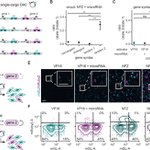
The main preprint from my postdoc is live!
biorxiv.org/content/10.64898…
The core idea is to try to make synthetic biology much more systematic and precise, akin to more mature fields of engineering.
This was an ambitious project, it started all the way back in February of 2020 and is only just now wrapping up! Thankfully there were no events in that timeframe, either around the world or specifically here at Harvard, that made things any more difficult than they needed to be.
The fundamental dilemma is that we are often forced to do one of two things when designing a synthetic circuits: either we can navigate a laborious design-build-test cycle where we iteratively optimize a circuit's performance tuning one parameter at a time, or we can screen a huge array of variants using techniques like directed evolution and pick the winners and have little insight into the molecular details of why one design worked better than the others.
Our idea was to try to get the best of both worlds, to combine precise mechanistic insights with extremely high throughput in such a way that we could systematically study the whole design space of a given circuit architecture.

Katie Galloway retweeted

Our new paper is out @J_Cell_Sci 🧬 doi.org/10.1242/jcs.265367 @NagataY51868 et al combined single-nucleosome imaging + Fucci probes. H2B-Halo motion stays nearly constant from G1 to G2. H3.3-Halo euchromatin nucleosomes are more mobile, but their motion also stays nearly constant.

Katie Galloway retweeted
This work from @VinayA116 is one of my favorite papers from our lab. Not only does it point to heterogeneity as being important in development, but it also points to division of labor: clones divvy up tasks in the organism based on their relative ability to perform well at a given fate! I like to think of it as "embryo economics".

..and have a look at the highly related paper from @arjunrajlab biorxiv.org/content/10.1101/… with complementary experiments that reinforce the point and reveal multicellular #memory


Katie Galloway retweeted

Excited that "Power-Seek" - identifying inheritable "memory" genes from a single snapshot scRNA-seq dataset using power laws, is finally out! @NCBS_Bangalore @NCBStheory Link (free for only 50 days!): authors.elsevier.com/a/1nfiF…


Inheritable 'memory' genes drive #cancer drug tolerance, but their discovery in clinical samples is a major challenge. Our new theory, moving away from Luria-Delbruck, detects them from a *single* scRNA-seq dataset! With #ArchishmanRaju led by @suvranil_1 tinyurl.com/4pef8scy