

Automated software engineering you can trust. We're hiring: https://www.teapawt.org/t.co/fYN7m0amNE
Boston, MA
Joined February 2024
- Tweets68
- Following164
- Followers168
- Likes87




Code Metal retweeted

This film was one of my first projects after joining Code Metal in June. We couldn't have predicted just how timely its message would become, especially in light of recent #Outages. Proud of the work we're doing to make AI usable and trustworthy for the systems we all rely on.

Last week’s outages reminded us how much of daily life depends on systems we rarely see, until they stop working.
Software is a critical part of that infrastructure, and much of it was built decades ago. It carries essential engineering knowledge and intent, embedded in aging code that is increasingly difficult to maintain and adapt.
Modernizing that software is a matter of national urgency. Code Metal brings together AI and formal methods to modernize critical software with independent verification. Our mission is to make AI trustworthy for systems that can’t fail.
We call this Work of Consequence.
More thoughts on this from our CEO and co-founder, @PeterMoralesX : codemetal.ai/workofconsequen…
Code Metal retweeted

The numerous outages remind me of how much daily life depends on systems we rarely see, until they stop working!
Software is a critical part of that infrastructure, and much of it was built decades ago. It carries essential engineering knowledge and intent, embedded in aging code that is increasingly difficult to maintain and adapt.
Modernizing that software is a matter of national urgency. Code Metal brings together AI and formal methods to modernize critical software with independent verification.
Our mission is to make #AI trustworthy for systems that can’t fail. At @Code_Metal_AI this Work of Consequence.
Last week’s outages reminded us how much of daily life depends on systems we rarely see, until they stop working.
Software is a critical part of that infrastructure, and much of it was built decades ago. It carries essential engineering knowledge and intent, embedded in aging code that is increasingly difficult to maintain and adapt.
Modernizing that software is a matter of national urgency. Code Metal brings together AI and formal methods to modernize critical software with independent verification. Our mission is to make AI trustworthy for systems that can’t fail.
We call this Work of Consequence.
More thoughts on this from our CEO and co-founder, @PeterMoralesX : codemetal.ai/workofconsequen…
Code Metal retweeted

Last week’s outages underscored how much of daily life depends on systems we rarely see, until they stop working.
We can no longer afford to leave that critical software untouched. And we cannot afford to change it without confidence.
This is our mission, and something that we call Work of Consequence at Code Metal.
I wrote about what Work of Consequence means to our team, here:
codemetal.ai/workofconsequen…
Code Metal retweeted
Almost a year ago, I joined @Code_Metal_AI Metal to help make AI trustworthy for systems that can’t fail.
Today’s #faagroundstop brings the stakes into focus. When critical infrastructure stops working, the consequences reach all of us.

At Code Metal, we have the distinct honor to work closely with both veterans and active-duty service members. This Veterans Day, we thank all who have served, including many who are our colleagues at Code Metal. We’re grateful for your service, and for the experience and perspective you bring to us every day. 🇺🇲

Code Metal retweeted
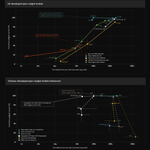
A year ago, I wrote about the gap in U.S. self-hosted AI. Our latest C++→Rust benchmark has four U.S. model families above 90% judged function-body correctness. Encouraging progress for teams keeping sensitive code on their own infrastructure. Details below.
codemetal.ai/research/back-i…

Chinese developers have set the pace in open-weight AI. So how close are US models on real engineering tasks?
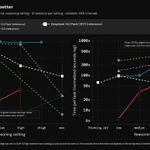
We tested 10 models on C++ to Rust translation. The newly released @Meta Muse Spark Open matched the strongest Chinese references; four US model families exceeded 90% judged function-body correctness.
Full post 👉 ordnl.link/yDJZqki

One interesting finding: the benchmark showed that more reasoning didn’t always improve results.
Muse reached 100% judged correctness at medium and xhigh, but xhigh used 2.5× the normalized time and nearly 3× the tokens.
At their highest settings, GLM-5.3 and GLM-5.3 Flash wrote fewer bodies, lowering their scores.

1
1
46
For organizations in regulated industries with strict security and deployment requirements, stronger U.S.-developed open-weight models means more viable options for putting AI to work on sensitive code. We're seeing that potential at Code Metal, as improvements in these models expand the options we can evaluate for our customers.
We're encouraged to see American models making progress and will continue following the race. 🏃 🇺🇸
Read the full study here 👉 ordnl.link/yDJZqki
1
22
Code Metal retweeted

Fantastic way to spend the weekend! Thanks @Code_Metal_AI @PeterMoralesX
Mission status: Complete ✅️ on the Code Metal Forge Hackathon: Operation Search and Rescue!
A massive thank you to all of our hackers, volunteers, judges, and industry experts for joining us in this mission - and can’t wait to share more about the winners and the event later this week! 🙏 ⛑️ 🔦 💻️ 🛠️


Code Metal Forge Hackathon: Operation Lost and Found is a go! 🚀
For the next 24 hours, hackers in Boston will have have access to real equipment and real expertise from first responders, academics, and deep tech innovators to solve a real-world search and rescue challenge.
Can't wait to see what gets built! ⛑️ 🔦 💻️ 🛠️


We're getting ready to kick off the Code Metal Forge Hackathon: Operation Lost and Found - and energy is high! Let's build 😎


Code Metal retweeted

We're ready to share our next verification pipeline!
Meet KEQ, a semantic equivalence prover based on the K Framework.
AI is getting good at rewriting legacy code, but the new version has to behave exactly like the old one (bugs included).
Tests can only show the presence of bugs, but not their absence. KEQ proves that two programs written in different languages match on every input, or it gives you a concrete counterexample.
Our first real-world trial has been proving equivalence between SHA 256 Rust and C implementations.
For more on how KEQ works, what's next, and how we're thinking of solving large-impact verification challenges, check out our latest blog post below.
A special thanks to the @Code_Metal_AI formal methods team, which inspired this work.
runtimeverification.com/blog…

Great chat on @ThisWeeknAI with @Jason @theanalognick @markjeffrey @Lons and our co-founder and CEO @PeterMoralesX !

Sam Altman says it’s “quite terrible” that so much of our increasingly scarce DRAM is isolated inside everyone’s home computers instead of being available in the cloud.
But is the answer putting one company in charge of everyone’s compute? Or the Bittensor concept, pooling idle home Macs into shared inference? Or some other strategy?
On TWiAI, Lightmatter’s Nick Harris suggests that, in fact, DRAM will always be considered scarce, as long as AI continues to scale. Chips store information in flat sheets, while brains store it in three dimensions. It’s a bottleneck we can’t escape.
@theanalognick, @PeterMoralesX, @markjeffrey, @LightmatterCo, @Code_Metal_AI, @stillcorecap, @jason, @lons, @sama
1:16 PayPal - Pay zero processing fees on your first $100K in eligible PayPal payment volume. Learn more at paypal.launch.co
3:00 How much should a company spend on AI?
8:40 Engy, Lium, and the road to cheaper inference
14:57 So what's the most you'd pay per month for your agents?
22:06 How unmetered inference changes the way you work
25:33 AI Agent Show & Tell
38:57 Chip stocks sink, lenders pull back from neoclouds
45:02 Dreaming of an agentic Christmas
49:46 Sam Altman hates that you have DRAM
55:01 Leaving math and science's Age of Heroes
1:04:23 Where do the LLMs get election info?
1:15:59 Subscribe to the TWiAI newsletter!
🎥 Watch the full episode here 👇
Code Metal retweeted
Was awesome to meet all the legends at @ThisWeeknAI , thanks @Jason
Sam Altman says it’s “quite terrible” that so much of our increasingly scarce DRAM is isolated inside everyone’s home computers instead of being available in the cloud.
But is the answer putting one company in charge of everyone’s compute? Or the Bittensor concept, pooling idle home Macs into shared inference? Or some other strategy?
On TWiAI, Lightmatter’s Nick Harris suggests that, in fact, DRAM will always be considered scarce, as long as AI continues to scale. Chips store information in flat sheets, while brains store it in three dimensions. It’s a bottleneck we can’t escape.
@theanalognick, @PeterMoralesX, @markjeffrey, @LightmatterCo, @Code_Metal_AI, @stillcorecap, @jason, @lons, @sama
1:16 PayPal - Pay zero processing fees on your first $100K in eligible PayPal payment volume. Learn more at paypal.launch.co
3:00 How much should a company spend on AI?
8:40 Engy, Lium, and the road to cheaper inference
14:57 So what's the most you'd pay per month for your agents?
22:06 How unmetered inference changes the way you work
25:33 AI Agent Show & Tell
38:57 Chip stocks sink, lenders pull back from neoclouds
45:02 Dreaming of an agentic Christmas
49:46 Sam Altman hates that you have DRAM
55:01 Leaving math and science's Age of Heroes
1:04:23 Where do the LLMs get election info?
1:15:59 Subscribe to the TWiAI newsletter!
🎥 Watch the full episode here 👇