

Building AI’s unified compute layer. We are hiring → https://www.teapawt.org/t.co/cPTAes09WV 🚀
Joined January 2022
- Tweets1.4K
- Following2
- Followers24.5K
- Likes941



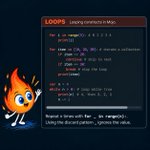



At the latest Modular community meeting, community member Maxim shared a research project on compile-time contracts and verification for Mojo.
The prototype uses Z3 to check function contracts, and in testing it turned up a bug in a MAX GPU kernel that has since been fixed. Bonus: the talk is built around Scrubs references.
Catch the recording: youtube.com/watch?v=AXmslSWk…

17
892
AI can write code faster than ever. So why do we still need software engineers?
@clattner_llvm joined Geoff Nielson on Digital Disruption to talk about why more code doesn’t mean better software, and why someone still has to decide what’s worth building.

You don’t need to chase every new AI tool. You do need to keep evolving.
This week on Digital Disruption, @clattner_llvm, creator of Swift and LLVM, makes the case for thoughtful pilots over panic.
Out now | Link below
#AILeadership #TechPodcast
Aren’t programming languages dead now that we have AI?
In his SPLASH 2026 keynote, Chris Lattner says no. When machines write the code, the language is the contract. Strong types, fast compilation, and clear interfaces help agents write correct code and give humans something readable to audit. His hot take: we’re not vibe coding assembly yet, and if we were, who would review it?
The talk shows how Mojo puts that into practice, with parameters that can be nearly any value, generics checked at the definition, and origins, its approach to memory safety without a garbage collector.
@clattner_llvm closes with an invitation to hardware innovators and researchers: Mojo is open source and open for research, and Modular is hiring.
Watch the keynote: youtube.com/watch?v=9-97SB5X…

Our team spent three days at the 2026 LLVM Developers' Meeting in Santa Clara, and for the first time we could walk through the entire Modular stack end to end. Thanks to the recent opening of the MAX source code, attendees could follow along in the code itself.
A few things we presented:
- A full-day Mojo and MAX workshop on how Mojo is built on MLIR, how the MAX graph compiler is layered on it, and how new hardware can be added to Mojo and MAX
- An in-depth talk about how Modular is using a graph compiler to build device graphs, instead of using runtime capture and replay at runtime, improving their performance and expanding hardware compatility
Read the full recap and view the slides from our Mojo workshop:
modular.com/blog/modular-llv…

This month's community meeting starts at 10 AM PT today, and we’re streaming it to Discord for the first time. Maxim Zaks is presenting “Can the compiler prove it?”, a status report from a research branch on contracts, inferred loop invariants, and an SMT solver for Mojo.
Tune in on Discord in our virtual-events channel, ask Maxim your questions live, and chat with the community: discord.com/invite/modular

Modular retweeted

Come say hey at @AWSreInvent! 👋
Join fellow developers, engineers, and the @Qualcomm team in Las Vegas for demos and live sessions focusing on AI, open source, data centers, IoT, and more.
Learn more and register here: bit.ly/4BXDVs4

Modular retweeted

AI infrastructure was built around NVIDIA GPUs. The next generation will run on a wider mix of chips.
I spoke with @clattner_llvm co-founder of @Modular, now part of @qualcomm, about how one software stack can target six chip architectures and make it easier to move workloads as costs and performance change.
Community meeting this Monday at 10 AM PT! Join us as Maxim presents: "Can the compiler prove it?", his status report from a research branch on contracts, inferred loop invariants, and an SMT solver for Mojo.
Come see what it could mean for the compiler to prove your code correct, ask Maxim your questions, and chat with other community members: luma.com/nov-modular

Chris Lattner’s #PyTorchCon keynote is now on YouTube. @clattner_llvm covers running models across more hardware with Mojo and MAX, and building an open developer ecosystem with @Qualcomm_Dev and @PyTorch.
youtube.com/watch?v=2XXf_iL1…
Can MAX unify a landscape of accelerators that each ship their own software stack? What does it take to get a new backend upstreamed and officially supported? How can the community unify efforts to build a thriving ecosystem?
@clattner_llvm and @iamtimdavis answered these and more during yesterday's livestream. Watch the recording: youtube.com/watch?v=iJnlZmVs…

Modular retweeted

Time to adjust to the faster pace of agentic coding!
We're moving to rolling releases, dropping C++11 for C++20 concepts in our SDKs, requiring nightly Rust 1.100 for upcoming allocator support, and making @Modular's Mojo 1.2 one of our primary first-party SDKs, for the next wave of heterogeneous infrastructure across CPUs and GPUs 🔥
Over the next weeks, with your help, we'll finalize the next versions of some of the world's fastest search, storage, perception and networking engines. Everything is already on GitHub under Apache 2.0, free for commercial use 🤗
unum.cloud/blog/development-…

Planning on tackling Advent of Code this year?
We put together an Advent of Mojo tutorial that covers the key language and standard library features for solving AoC puzzles, like reading text from a file, extracting numbers from strings, sorting values, and working with grids.
Now that Mojo is stabilized and open source, it's a great time to pick up the language. And AoC is a great excuse to try something new.
advent.mojolang.org?utm_sour…
#AdventOfCode

If you try Advent of Mojo, be sure to join our Discord server's advent-of-code channel to share your solutions: discord.com/invite/modular
We'll be sending out exclusive new Mojo stickers to anyone who shares their approach to Advent of Code in Mojo. 🔥
4
512
Q&A with Chris and Tim: The New MAX License www.teapawt.org/i/broadcasts/2onzJpZyz…

Wondering what the new MAX License means for your project?
@clattner_llvm and @iamtimdavis are taking your questions tomorrow at 10 AM PT.
Build, modify, and ship with MAX, and get the details from Chris & Tim: luma.com/max-license
Submit your questions here: forms.gle/kYzFgDCgsaqZQPqD8

Modular retweeted

3DGS now running without CUDA, without Python and with a single language for both training code and GPU kernels.
Finally got around to update MojoSplat (using @Modular Mojo), matching @fhahlbohm Faster-GS on CUDA GPUs without even CUDA Toolkit installed
github.com/bertaveira/mojosp…
Our Developer Advocate @dunn_oconnor wrote about the elephant in the room at the 2026 @llvmorg Developers' Meeting: the challenge of building durable open-source architecture in the agentic era. This was a major theme across talks, and Michael argues that it's a significant opportunity for MAX and Mojo: modular.com/blog/llvm-dev-me…
LFM3 from @liquidai is now running on MAX. 🧑🚀
All 6 models in the suite are supported, across text, audio, vision, and omni. The implementations are open source, so you can read the code, run it, and build on it: max.modular.com/api/python/p…
Which modality are you trying first: text, audio, vision, or omni?

Introducing 𝙻𝙵𝙼𝟹: our new generation of Liquid Foundation Models. With a new tri-hybrid architecture and new multimodal encoders, the LFM3 family is the ideal model suite for specialized intelligence.
> 6 model instances, across text, audio, vision, and omni modalities, generative and decision models.
> 𝙻𝙵𝙼𝟹-𝟷.𝟽𝙱: text, 256k context window.
> 𝙻𝙵𝙼𝟹-𝚅𝙻-𝟸𝙱: vision-language model with video-input support for spatial understanding
> 𝙻𝙵𝙼𝟹-𝙰𝚞𝚍𝚒𝚘-𝟸𝙱: tool calls, voice chat, reasoning in 18 languages.
> 𝙻𝙵𝙼𝟹-𝙾𝚖𝚗𝚒-𝟸𝙱: an omni model combines vision, audio, and language.
> 𝚍𝟷-𝟸𝙱 and 𝚍𝟷-𝙾𝚖𝚗𝚒-𝟸𝙱: decision models with typed outputs and calibrated probabilities in a single pass. Omni adds audio input.
> fine-tune on 1 GPU.
> a new tri-hybrid architecture
> architecture optimized for 14 processor classes across GPUs, CPUs, and NPUs.
> 𝙻𝙵𝙼𝟹-𝚅𝙻-𝟸𝙱 is a beast. It performs competitively with Gemma 4 12B (6x larger), and Gemini 3.5 Flash Lite, and GPT-5.6 Luna, with 1.9B parameters.
> 𝙻𝙵𝙼𝟹-𝟷.𝟽𝙱 is #1 on the Pareto frontier of device intelligence 𝚙𝚒𝚙𝚎𝚝𝚝𝚎.𝚕𝚒𝚚𝚞𝚒𝚍.𝚊𝚒
Every modality for specialized intelligence. Pick the one that fits your use case, customize it, and run it on-device.
1/ 🧵
Raw throughput can look great while your users wait. Goodput counts only the requests that meet your latency SLOs, and it measures how well your LLM serving system meets both performance and user experience goals.
Explore goodput and many other LLM inference concepts, visualized with interactive tools, in the free LLM Inference Handbook: handbook.modular.com?utm_sou…

Now that MAX is source available, it’s the perfect time to revisit two tech talks from ModCon.
Start with Bing and Ehsan’s deep dive into the MAX stack to learn how a model goes from graph to compiled kernels to serving: youtube.com/watch?v=3H8Orjaa…
Then Beyond GPUs: Abdul Dakkak and Mihailo Stojanovic of HTEC on what it takes to bring MAX to new accelerators like Google TPU and d-Matrix Corsair: youtube.com/watch?v=hYjKbTAG…
Finally, join Chris Lattner and Tim Davis for a live Q&A on the new MAX license on November 10th at 10 AM PT: luma.com/max-license
4
520